Exhibitions
End
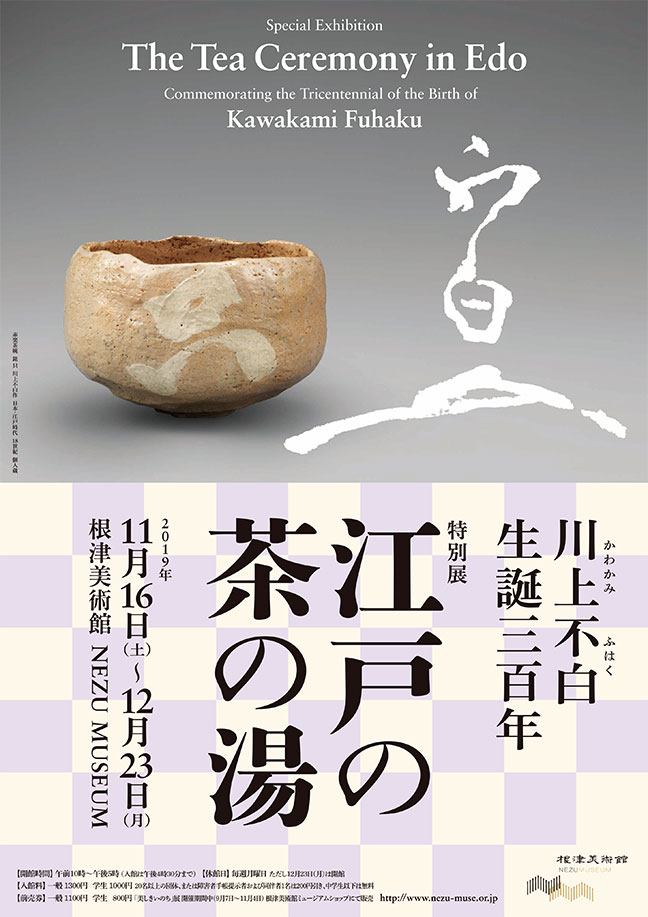
Special Exhibition
The Tea Ceremony in Edo Commemorating the Tricentennial of the Birth of Kawakami Fuhaku
Saturday, November 16 - Monday, December 23, 2019
Overview
| Dates | Saturday, November 16 - Monday, December 23, 2019 | |
|---|---|---|
| Closed | Mondays, except December 23 | |
| Hours | 10 a.m. - 5 p.m.(last entry: 4:30 p.m.) | |
| General admission (On-line timed-entry tickets) | Adult 1300 yen, Student 1000 yen | |
| Gallery | 1/2 | |
Kawakami Fuhaku (1719–1807) was the second son of a vassal of the Mizuno family, chief retainers serving at the Edo residence (in present-day Tokyo prefecture) of the Tokugawa daimyo, who ruled the Kishū domain (now Wakayama prefecture). In 1734 (Kyōhō 19), at the age of sixteen, young Fuhaku went to Kyoto, where he entered the tutelage of the tea master Joshinsai Tennen Sōsa (1705–51), the seventh-generation head of the Omotesenke School, who served as instructor in the Way of Tea to the Kishū Tokugawa family. Fuhaku would later spread Senke-style tea in Edo and establish the Fuhakuryū tradition of tea ceremony there.
This exhibition celebrates the tricentennial anniversary of Fuhaku’s birth, covering a diverse range of topics, from his position as disciple of Joshinsai and his distinctive taste in utensils to his relationships with the various craftsmen who made those utensils and the daimyo lords and others he himself taught. It also presents charming paintings and calligraphies that reflect Fuhaku’s character and examines his influence on modern-day connoisseurs of tea culture, such as Nezu Seizan (Kaichirō Sr., 1860–1940), whose collection formed the foundation for the Nezu Museum collection. From these various angles, we delve into the philosophy behind Fuhaku’s approach to tea, which was widely espoused throughout the latter half of the Edo period and into the modern period.
Gallery Exhibits
- Ceramics
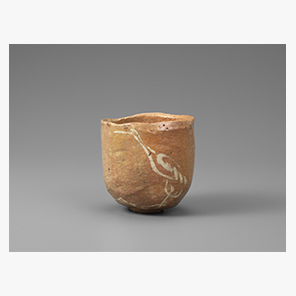
Tea Bowl with Crane Design
By Kawakami Fuhaku
This somewhat tall and narrow-bodied semi-cylindrical tea bowl is decorated with a long-necked crane painted in white slip. The dynamic figure of the crane matches the images of cranes that were among Fuhaku's favored painting subjects. The bowl forms a pair with a black tea bowl bearing an image of a tortoise.
- Ceramics
- Important Cultural Property
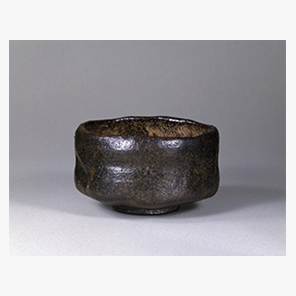
Tea Bowl, named Kamiyaguro
By Chōjirō
This large and relaxed form is different in shape from other semi-cylindrical tea bowls by Chōjirō. It was presented as a farewell gift to Fuhaku by his patrons, the Kōnoike family, who were wealthy merchants from Osaka, when he decided to move to Edo.
- Calligraphy
- National Treasure
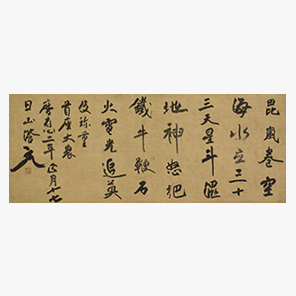
Testament
By Qingzhuo Zhengcheng
This is the last calligraphy of Qingzhuo Zengcheng, a Chinese priest who had come to Japan. Fuhaku saw the work at a tea gathering in Sakai in present-day Osaka prefecture while he was living in the Kansai region between the Eight Month of 1775 (An’ei 4) and the end of that year. The fact that such an important masterwork was used when receiving him is a testament to Fuhaku’s high reputation.
- Lacquer
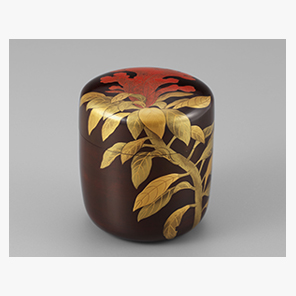
Tea Caddy with Cockscomb
By Shiomi Kohei
When Fuhaku was training in Kyoto, he saw a painting of cockscombs by the Yuan-dynasty Chinese painter Qian Shunju that was owned by Honpōji temple just outside his master's residence. Deeply moved by this work, Fuhaku not only copied it himself, he also used the design to decorate tea caddies.
- Calligraphy
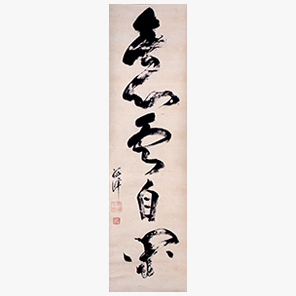
Poem in One Line
By Kawakami Fuhaku
According to the Chajin kafu, a geneaology of tea practitioners of the time, Fuhaku counted among his disciples 114 daimyo and shogunal vassals, affiliates of 12 temples, 104 retainers of various domains, and 69 merchants and other individuals, revealing a broad selection of people from varying social classes. Here, we look at his interactions with some of the most exemplary daimyo tea masters.
- Ceramics
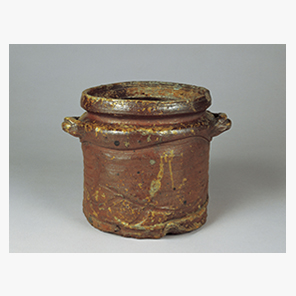
Fresh Water Container, named Mokurai
Bizen ware
This is a Bizen ware fresh water jar in the Momoyama style carved with spatula markings. On the bottom, it is inscribed "Mokurai," the name of Fuhaku’s tea room and one of his pseudonyms, in red lacquer by Joshinsai. After it was owned by Fuhaku, it passed into the hands of Nezu Seizan in 1922 (Taishō 11).
- TOP
- Exhibitions
- The Tea Ceremony in Edo