Exhibitions
Upcoming
Special Exhibition
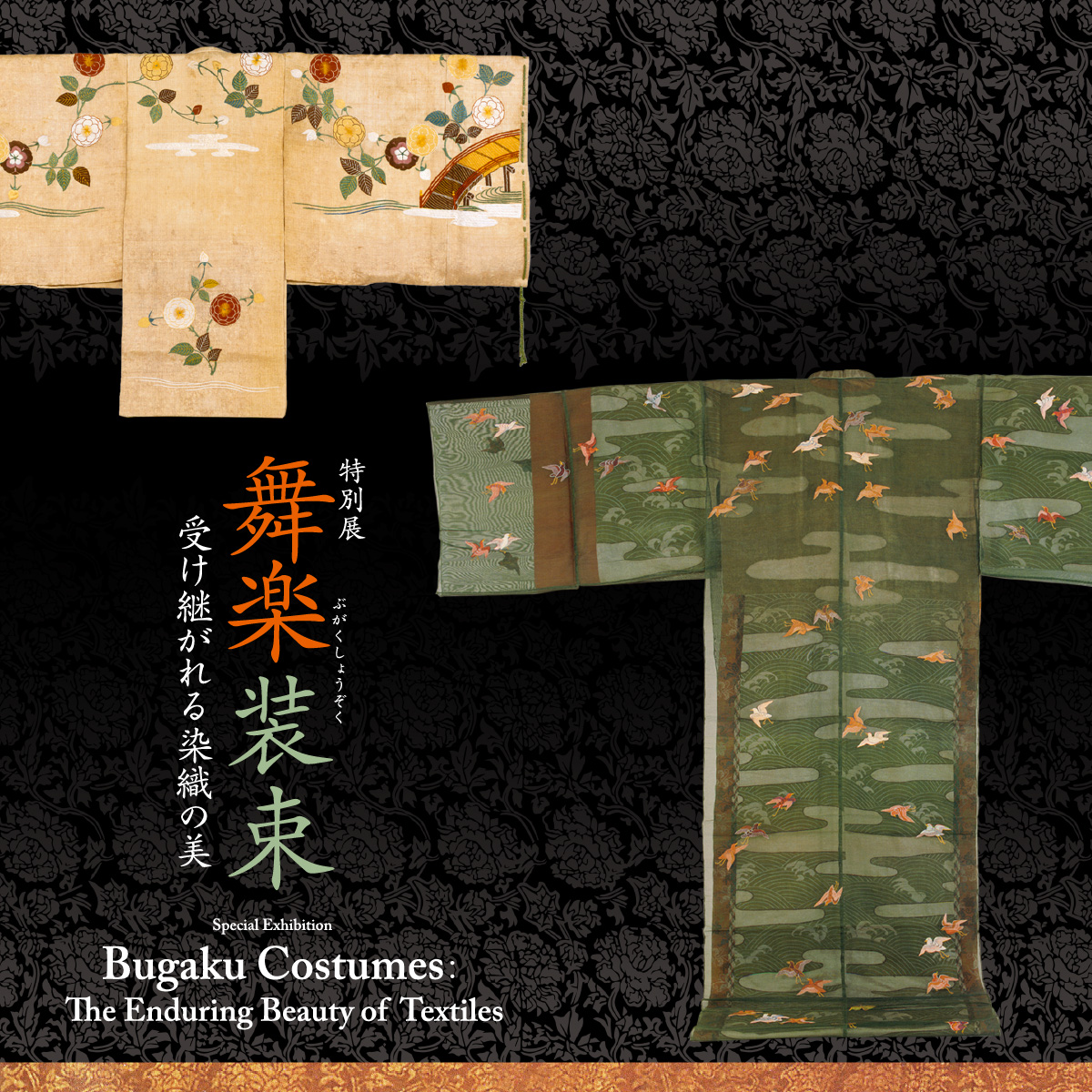
Bugaku Costumes The Enduring Beauty of Textiles
Saturday, October 24 – Monday, November 23, 2026
Overview
| Dates | Saturday, October 24 – Monday, November 23, 2026 | |
|---|---|---|
| Closed | Closed on Mondays, except November 23. | |
| Hours | 10 a.m. - 5 p.m.(last entry: 4:30 p.m.) | |
| General admission (On-line timed-entry tickets) | Timed-entry ticket (online) Adult : 1600 yen Student* : 700 yen *University students and above with valid student ID; Highschool and younger students with valid student ID will be admitted free of charge. Same-day tickets: plus 200 yen on the above prices. |
|
| Gallery | 1, 2 | |
Gagaku, traditional Japanese court music and dance, has achieved its own unique development while incorporating the music and dance from the Asian continent that began to reach Japan in the fifth century. Gagaku that includes dance is called Bugaku. The costumes worn in Bugaku are lavish transformations of the garb of the court military officials once in charge of the dance. For dances with music of Chinese origins, sahō, the left, the costumes have red as their base color. Those associated with the Korean Peninsula, uhō, the right, have primarily blue costumes.
Bugaku performances were not limited to the court; they were also popular at major temples and shrines. Extant examples of costumes handed down at the Amano-sha Shrine (also known as the Niutsuhime-jinja Shrine), the shrine to the tutelary deity of Mount Kōya, were created with fascinating designs in effective use of the textile techniques of the fourteenth and fifteenth centuries. During Japan’s Warring States period, which began with the Ōnin War (1467-1477) and continued for about a century, Bugaku suffered badly, but was revived and gradually systematized by members of the court and people in power. In that process, costume design also converged, with great consistency among the costumes used at the court and the major temples and shrines throughout Japan. Through the costumes handed down at the Shitennōji Temple in Osaka, which has sustained a lasting Bugaku tradition, the superb works in the collection of Rinnoji Temple in Tochigi prefecture, displayed for the first time in four decades, and other works, visitors will be able to experience their beauty.
Please savor the beauty of these costumes, which adorned Bugaku for centuries and still do today.
Gallery Exhibits
- Important Cultural Property
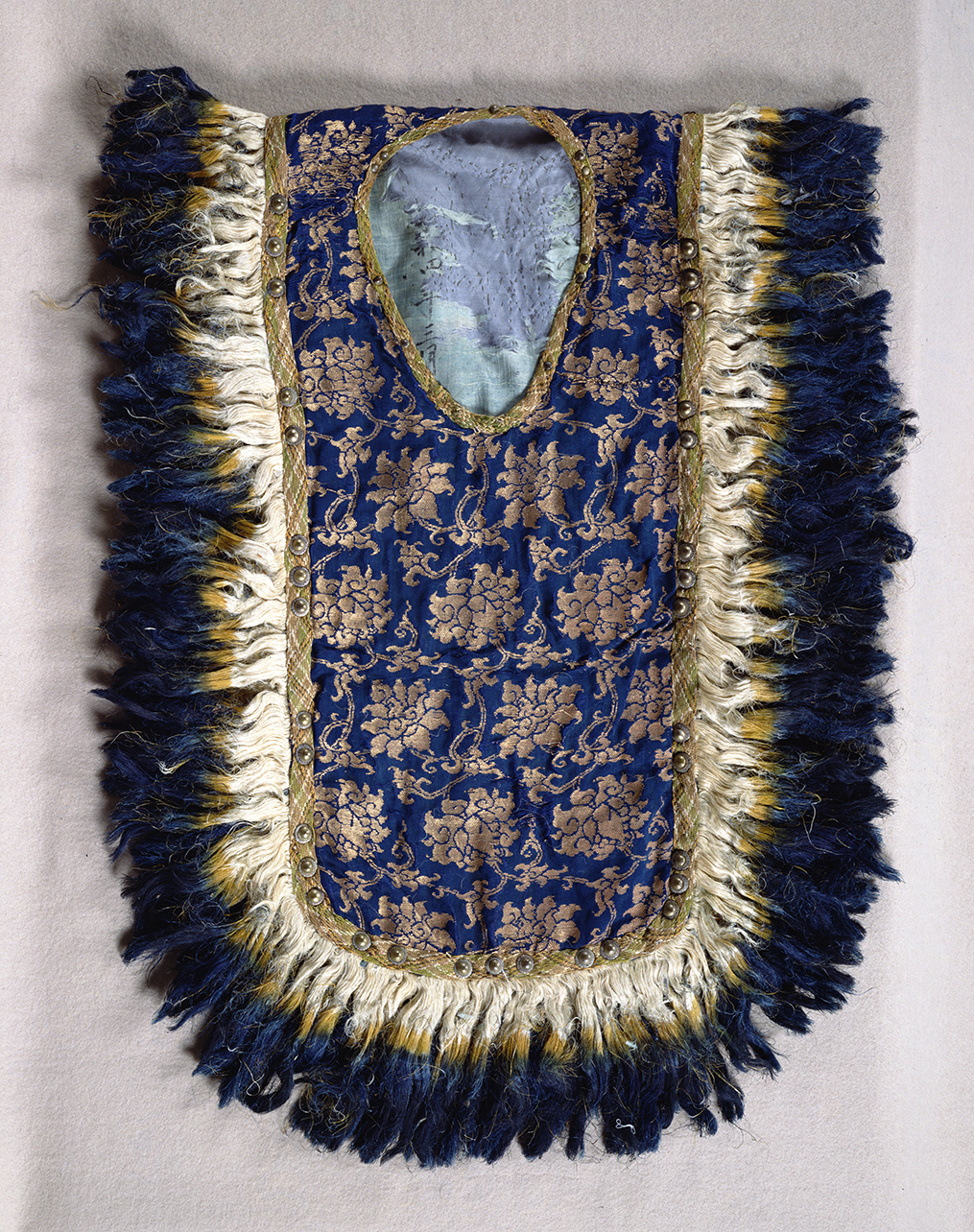
Ryōtō Bugaku Costume with Peony Scroll Design on Deep Blue Ground
This ryōtō with a tassels around its edges makes lavish use of imported gold brocade. According to the inscription in ink on its lining, it was given as an offering to the Niu-sha Shrine (the Amano-sha Shrine) on Mount Kōya in 1378. Its precise dating and excellent condition make this costume an extremely valuable criterion work.
- Important Cultural Property
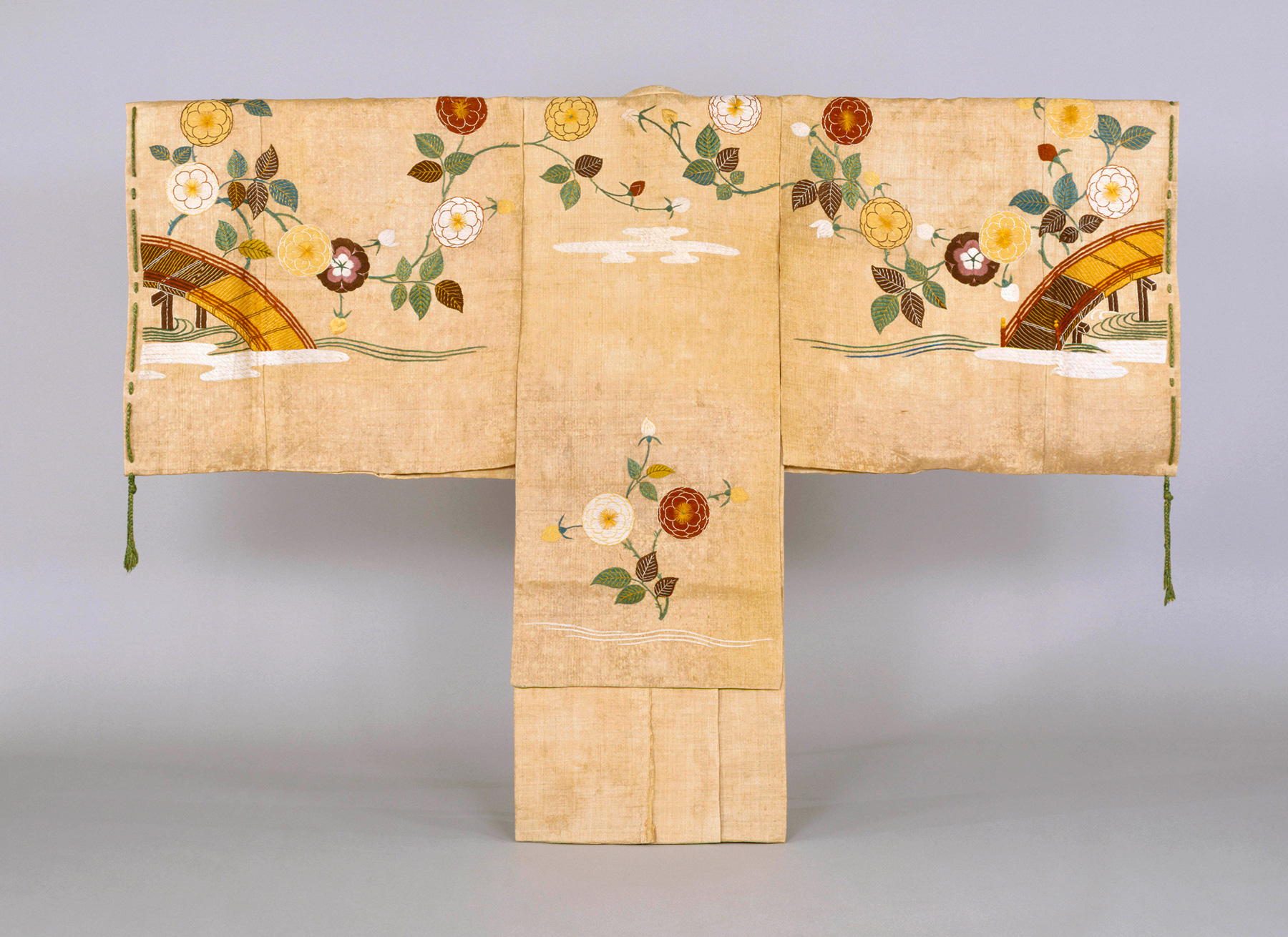
Suikan Bugaku Costume with Rose and Bridge Design on Pale Red Ground
This suikan features embroidery all over the back, showing roses and bridges drawn with elegant curves on a pale pink background. Based on the ink inscription on the accompanying hakama trouser, we know that it was prepared for a rehearsal during the Issaikyo-e ceremony held in 1454.
- Important Cultural Property
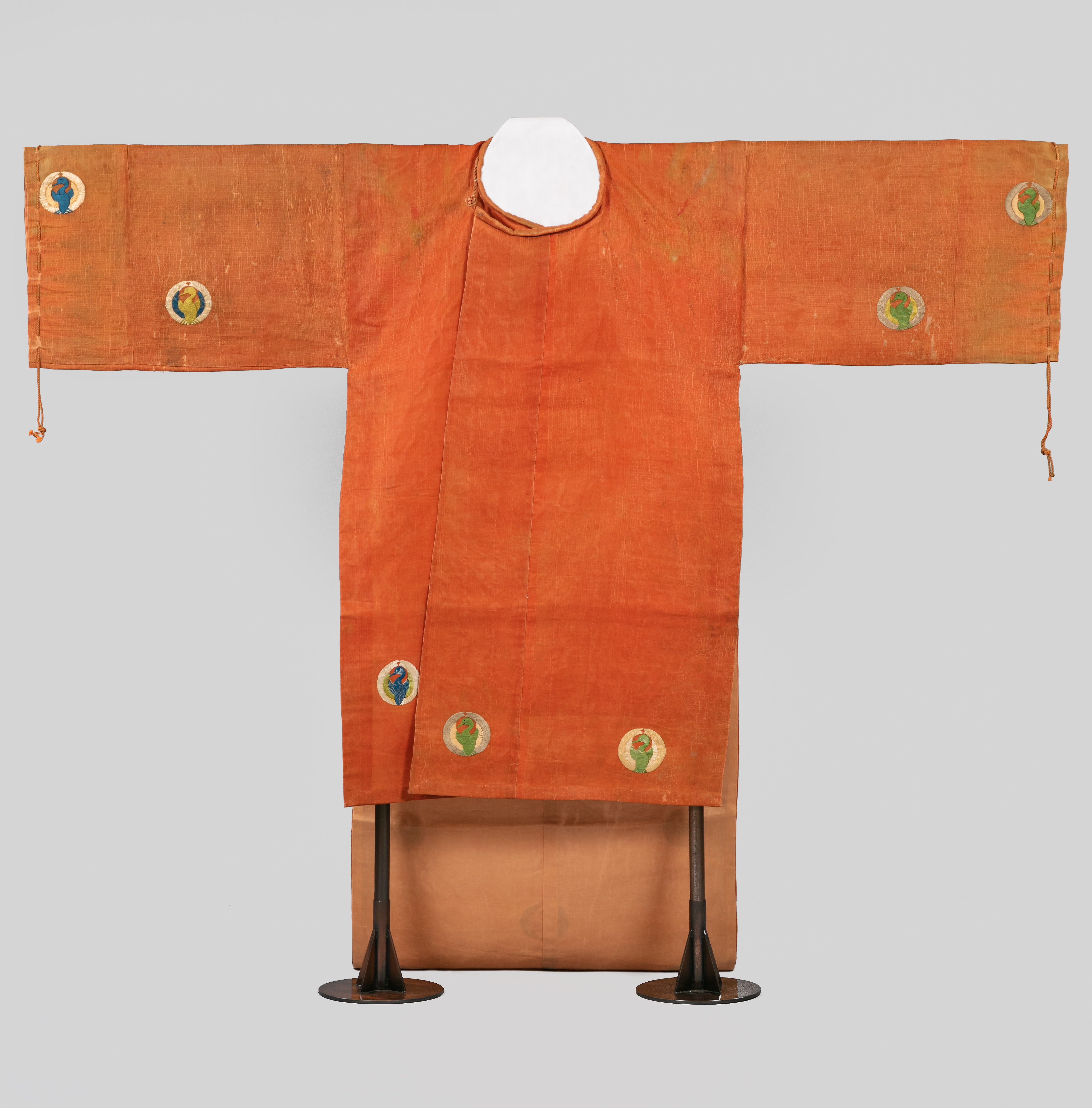
Hō from a Set of Bugaku Costumes for Taiheiraku
Bugaku has been performed at Shitennōji Temple in Osaka for centuries by the musicians of the Tennōji Gakuso, which has deep ties with that temple. When the temple was burned down during a conflict in 1576, its Bugaku equipment was also lost. The Toyotomi clan, however, donated replacements, and performances resumed. The Bugaku Taiheiraku performed there is an essential performance, a dance that marks the conclusion of the Buddhist Shōryō-e memorial service for the spirit of Prince Shōtoku. The more than ten Taiheiraku costumes include armor and weapons.
- Important Cultural Property
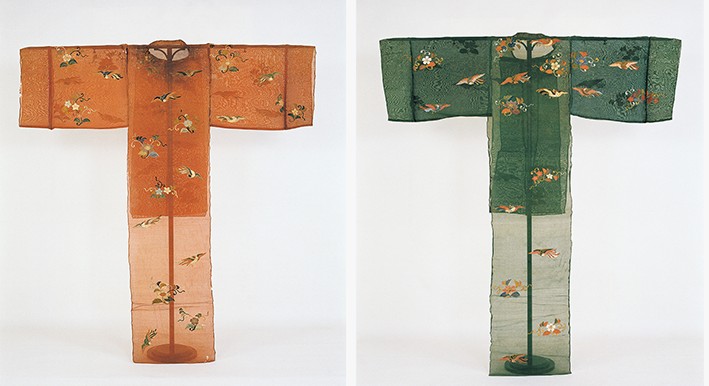
Left: Hō Bugaku Costume for Karyōbin with Small Bird and Floral Design on Red Bround
Right: Hō Bugaku Costume for Karyōbin with Small Bird and Floral Design on Green Bround
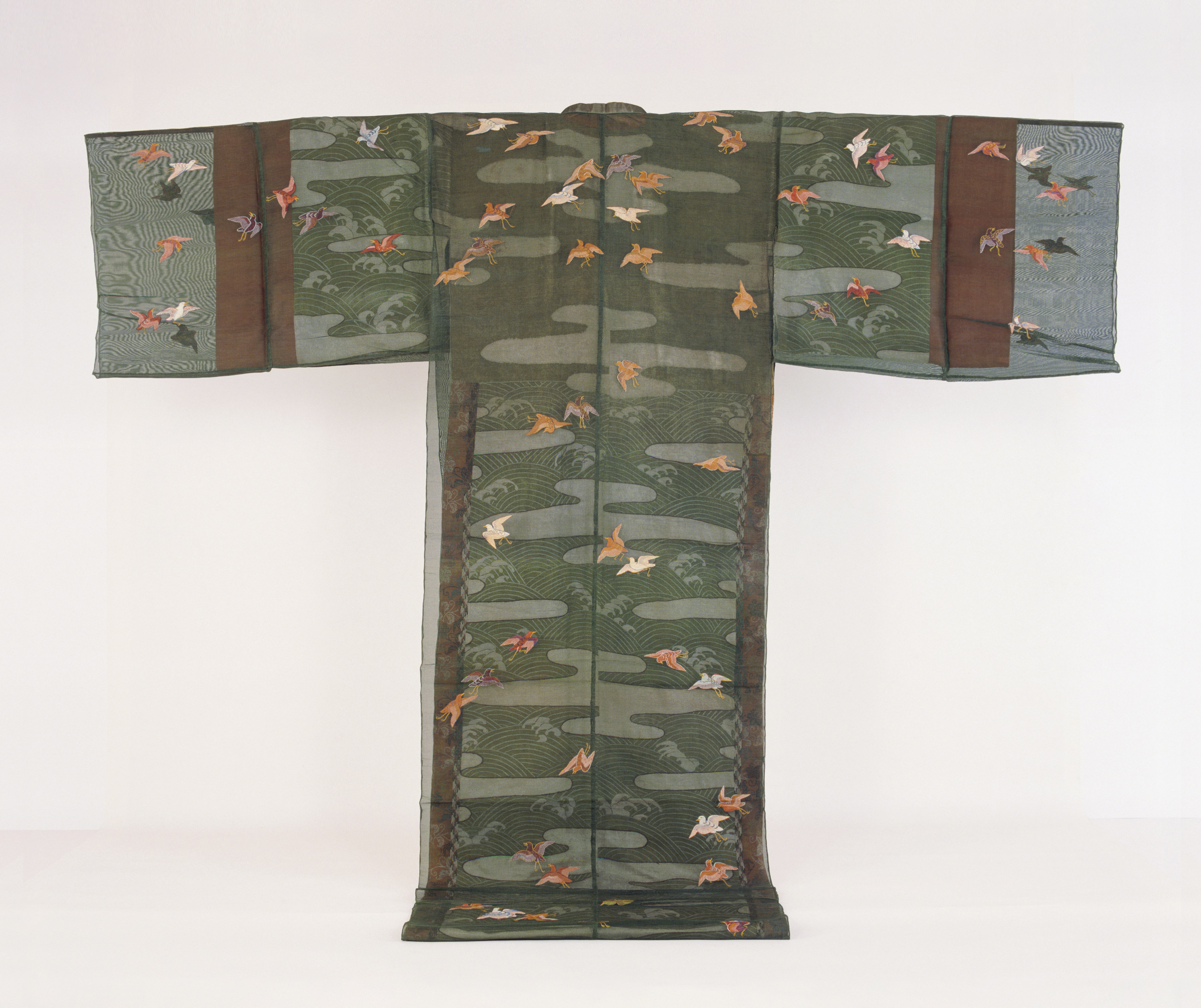
The Bugaku costumes at Rinnōji Temple in Tochigi prefecture were prepared by the order of Iemitsu, the third Tokugawa shogun, at the time of the twenty-first memorial service for his grandfather, Tokugawa Ieyasu. For the performance of Karyōbin, a children’s dance, costumes used only for that performance and embroidered with small bird motifs and floral motifs are worn. Because Karyōbin is music and dance of the left, the robe worn by its performer is usually red. Unusually, at Rinnōji both red and blue robes for Karyōbin have been handed down.
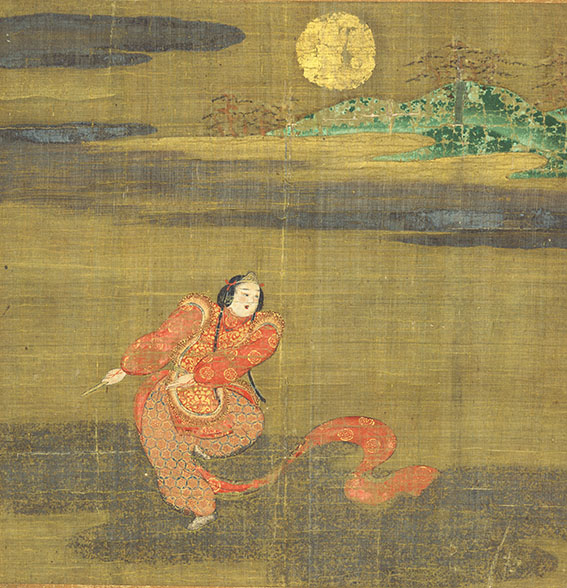
Bugaku Dance, Raryōō
Attributed to Tosa Yukihide
This small Yamato-e painting depicts a child performer dancing in Raryōō, a Bugaku dance. The child is wearing a gold brocade ryōtō with a peony design over a red hō garment, plus a divided skirt tied at the ankles (kukuribakama). It shows us how the parts of the costume were actually worn. The child is wearing a cap but no mask; the absence of a mask tells us a warawa-mai, a child’s dance, is being performed.
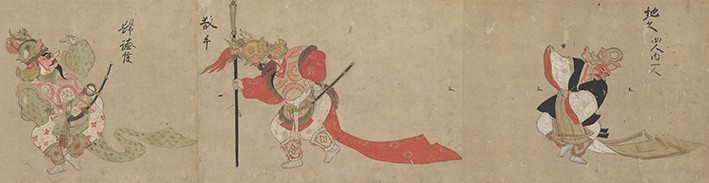
Bugaku Dancers
By Abe no Suehide
The date, Ōei 5 (1398) inscribed on the end of this scroll tells us that this is a rare example of a clearly dateable work from Japan’s medieval period. The detailed depiction in color communicates what costumes were like then. This scroll is thought to be a copy by the musician Abe no Suehide of a painting that was owned by the imperial prince-priest Toganoo-no-miya Gi’nin.
Concurrent Exhibitions
During “Bugaku Costumes:The Enduring Beauty of Textiles" (Saturday, October 24 – Monday, November 23, 2026)
Gallery 2
Bugaku Costumes:The Enduring Beauty of Textiles
Following Gallery 1featuring the Bugaku costumes from Amanosha shrine of Kōyasan and Shitennōji Temple, you can enjoy the costumes from Rinnōji Temple.
- Textiles
- Important Cultural Property
Hō and Shitagasane Bugaku Costumes
Gallery 3
The Allure of Buddhist Art: Small Gilded Buddhist Statues and Buddhist Implements from Japan
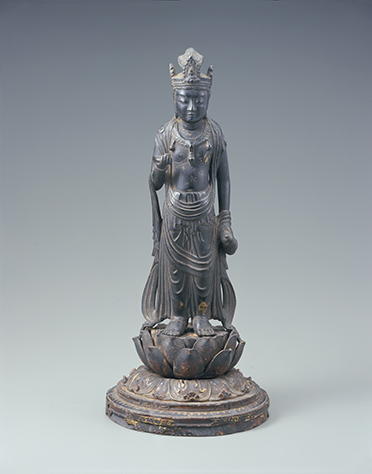
In gallery 3, the exhibition includes small gilded Buddhist statues and copper Buddhist implements with Buddhist images rendered on them.
- Sculpture
Standing Kannon-bosatsu(Avalokiteśvara)
Gallery 4
Ancient Chinese Bronzes
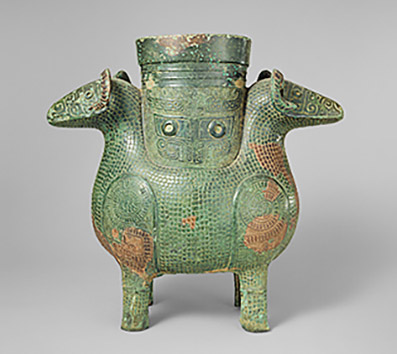
The Nezu Museum collection of bronzes is world-renowned, and particularly strong in the area of late Shang (17th to 11th centuries BC) dynasty vessels, the pinnacle production period of this medium.
- Archaeological Artifacts / Mirror
- Important Cultural Property
Double-Ram Zun
Gallery 5
The Beauty of Brush-line Painting
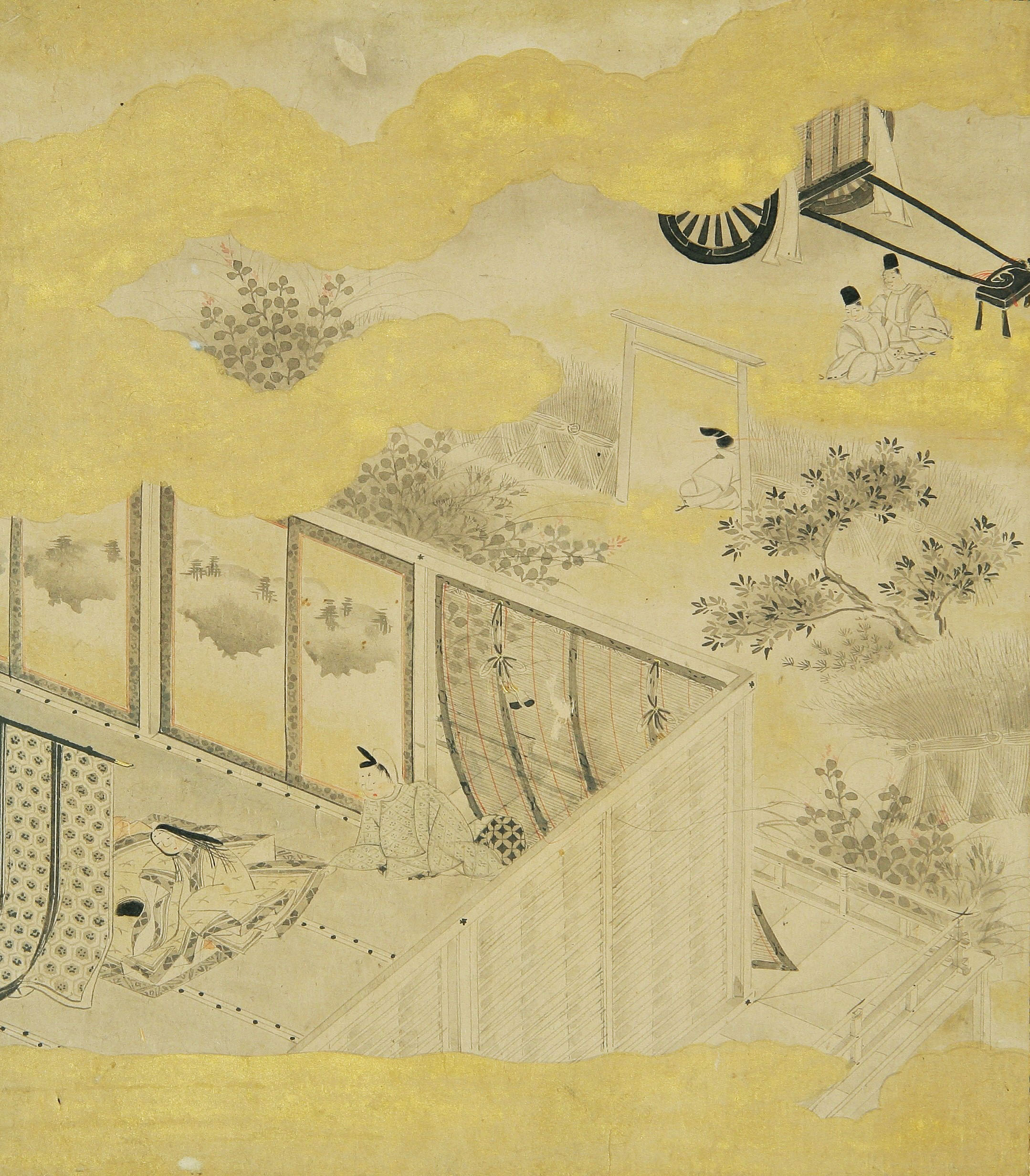
In brush-line painting, fine lines of ink play the major role. Please enjoy its tranquil, monochromatic beauty, in paintings of Buddhist icons from before the medieval period, underdrawings for picture scrolls, early modern Yamato-e paintings, and modern paintings.
- Painting
“The Sacred Tree,” from The Tale of Genji
Attributed to Sumiyoshi Gukei
Gallery 6
Opening the Hearth: Welcoming Winter
In November, the hearth in the tearoom is reopened and its interior and the utensils are renewed in preparation for winter. For a tea gathering to celebrate this turning point in the year, we select an elegant assemblage of tea utensils.
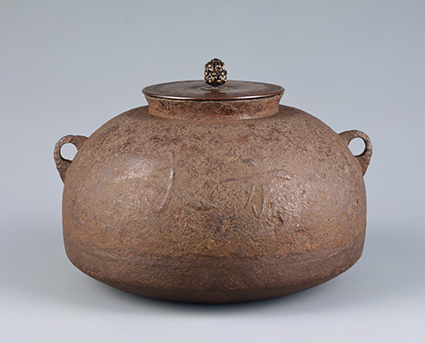
- Metalwork
Kettle
Tenmyō ware, <i>jūōguchi</i> type
Special Case
Decorated Clock
This splendid Qing dynasty clock, a favorite of the Qianlong Emperor (1711-1799), is not to be missed.
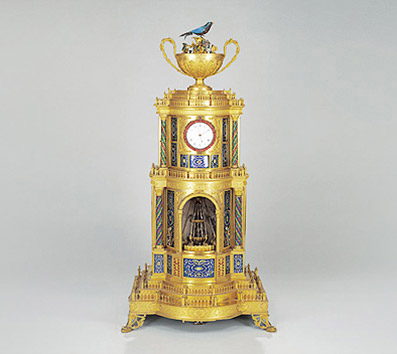
- Decorated Clock
Clock Decorated with a Bird on a Cup
- TOP
- Exhibitions
- Upcoming