Exhibitions
End
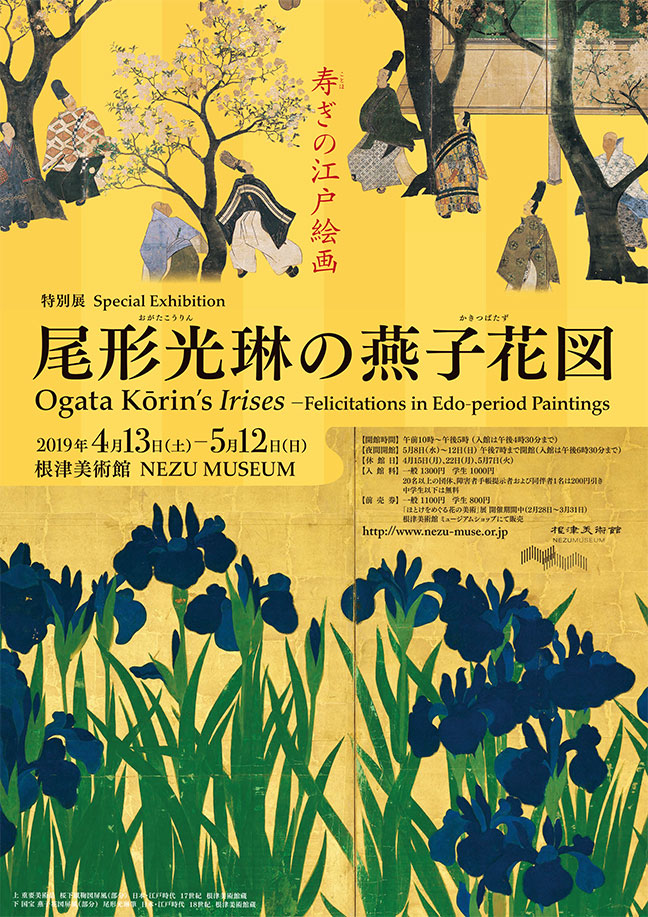
Special Exhibition
Ogata Kōrin's Irises> Felicitations in Edo-period Paintings
Saturday, April 13 - Sunday, May 12, 2019
Overview
| Dates | Saturday, April 13 - Sunday, May 12, 2019 | |
|---|---|---|
| Closed | Mondays,April 15, 22 and May 7 | |
| Hours | 10 a.m. - 5 p.m.(last entry: 4:30 p.m.) 10 a.m. - 7 p.m. May 8-12 (last entry: 6:30 p.m.) | |
| General admission (On-line timed-entry tickets) | Adult 1300 yen, Student 1000 yen | |
| Gallery | 1/2 | |
The Irises screens by Ogata Kōrin (1658–1716) are a National Treasure. They are both a painting of flowers and one based on the Yatsuhashi, “eight bridges,” scene in the Tales of Ise. And Yatsuhashi has long been a famous place celebrated in waka poetry. Flowers, classic themes, famous places:: given the multifaceted nature of these screens, this exhibition of Ogata Kōrin’s Irises consists of three sections.
The first section presents works whose themes are the aristocratic manners and court literature admired by people in the Edo period. The second section brings together a profusion of floral paintings, a genre inspired by the boom in growing flowers that occurred in and around the imperial court in the early Edo period. The third presents works that depict the city of Kyoto, filled with the excitement of the Gion Festival, plus famous places and events in other parts of the country, including spots bustling with pilgrims visiting shrines and temples and tourists on pleasure jaunts. Enjoy this bouquet of paintings from the Edo period, an age blessed with peace.
Gallery Exhibits
- Painting
- National Treasure
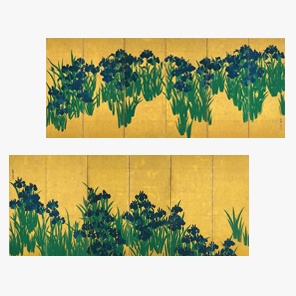
Irises
By Ogata Kōrin
Kōrin, who was born and raised in a Kyoto family of merchants purveying deluxe textiles to the elite, combined outstanding painterliness with a strong sense of design. In these magnificent golden screen paintings, with their lavish use of high quality pigments, he captures the very breath of the irises. Far beyond a mere floral painting, the screens unleash a dazzling brilliance making them a landmark in the history of painting in Japan.
- Painting
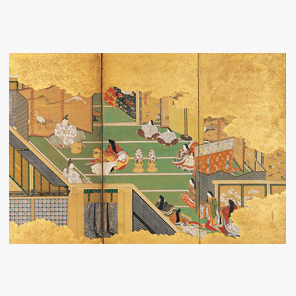
The Tale of Genji (right screen, detail)
By Sumiyoshi Gukei
The right-hand screen of this pair of six-fold screens inspired by the Tale of Genji depicts festivities on Prince Genji’s fortieth birthday. These small screens, in which Genji’s wife and daughters are shown expressing their good wishes as he reaches the prime of life, are thought to have been part of a bride’s trousseau.
- Painting
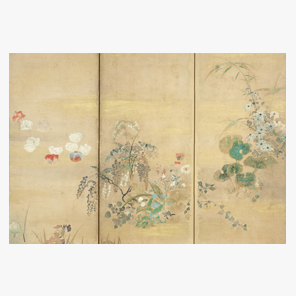
Flowers and Grasses (detail)
I'nen seal
The Tawaraya Sōtatsu studio responded to the early Edo gardening vogue by creating folding screens depicting a cornucopia of flowers. These screens are by Kitagawa Sōsetsu, Sōtatsu’s second generation successor, or by his studio.
- Painting
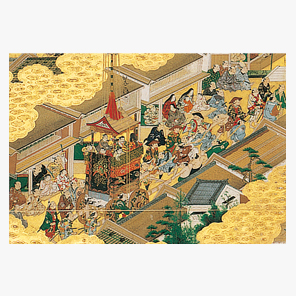
Scenes In and Around Kyoto (right screen, detail)
These screens present a bird’s-eye view of both the city of Kyoto and its outskirts, with human activities depicted in detail. Particular emphasis is placed on the processions of yamahoko floats and portable shrines during the Gion Festival.
- TOP
- Exhibitions
- Ogata Kōrin's Irises>