
Exhibitions
End
Museum Collection Exhibition
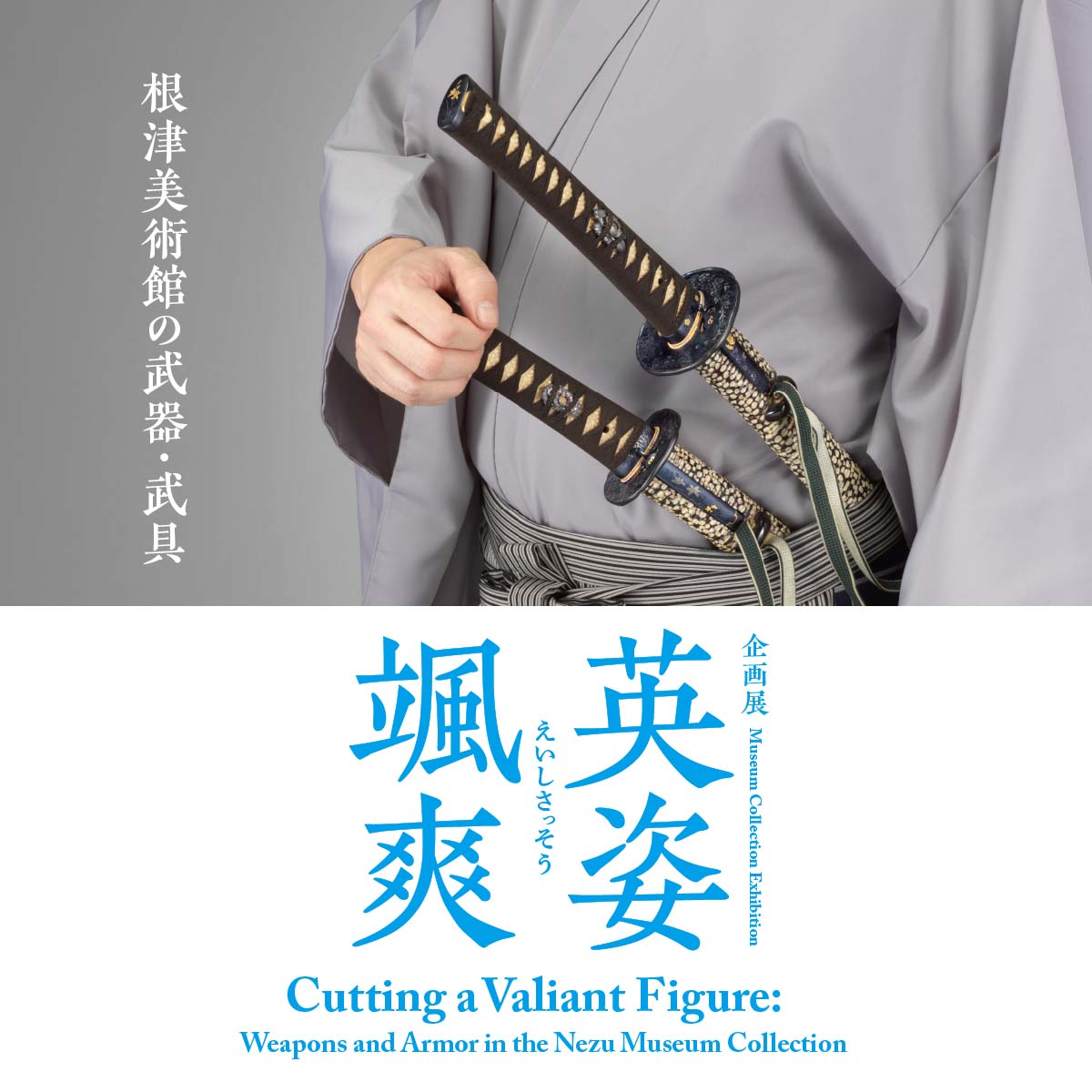
Cutting a Valiant Figure Weapons and Armor in the Nezu Museum Collection
Saturday, February 14 – Sunday, March 29, 2026
Overview
| Dates | Saturday, February 14 – Sunday, March 29, 2026 | |
|---|---|---|
| Closed | Closed on Mondays, except Feburary 23, and closed on Feburary 24. | |
| Hours | 10 a.m. - 5 p.m.(last entry: 4:30 p.m.) | |
| General admission (On-line timed-entry tickets) | Adult 1300 yen, Student 1000 yen | |
| Gallery | 1, 2 | |
Arms and armor occupy a special place in the Nezu Museum collection. The museum’s founder, Nezu Kaichirō, Sr., said “I do not understand swords.” He was thus not particularly interested in collecting them. In 1909, however, he decided to purchase a group of more than 3,000 pieces of arms and armor from the entrepreneur Mitsumura Toshimo (1877–1955), a decision motivated by concern over the possible loss of these superb works overseas, to prevent their dispersal and preserve the integrity of Mitsumura’s systematically assembled collection. Although the number of objects in the collection has decreased to roughly half of what they once were, the museum’s arms and armor holdings are still largely from the original Mitsumura Collection and continue to embody its distinctive character.
This exhibition offers visitors the opportunity to enjoy a carefully selected set of these refined and outstanding formworks from our collection of arms and armor.
Gallery Exhibits
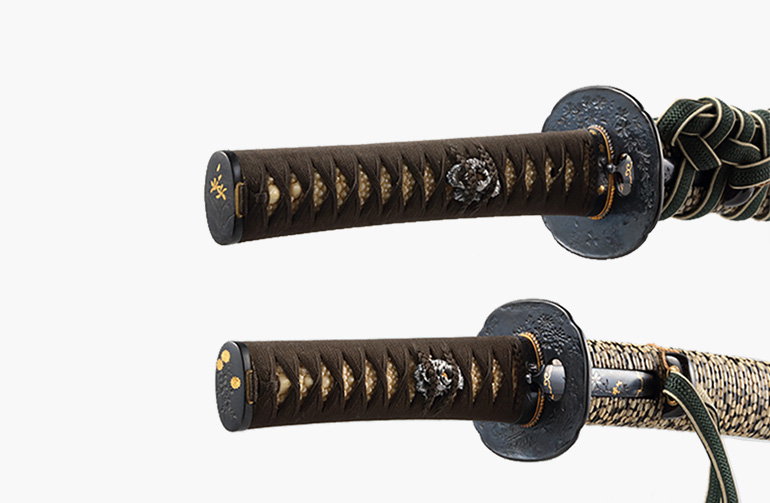
Pair of Sword Mountings with Polished Ray Skin Scabbard with Ribbed Design
By Goto Ichijō, Ikeda Takao
This sword mounting was specially commissioned by Mitsumura Toshimo for a blade forged by Gassan Sadakazu. Mitsumura selected matching fittings from the many works of Gotō Ichijō in his collection and is thought to have asked Ikeda Takao to create any missing pieces. Representing Mitsumura’s dedication to preserving Japan’s culture of sword craftsmanship and related traditions, this work demonstrates his striving to protect a cultural legacy threatened by the Sword Abolishment Edict of 1876.
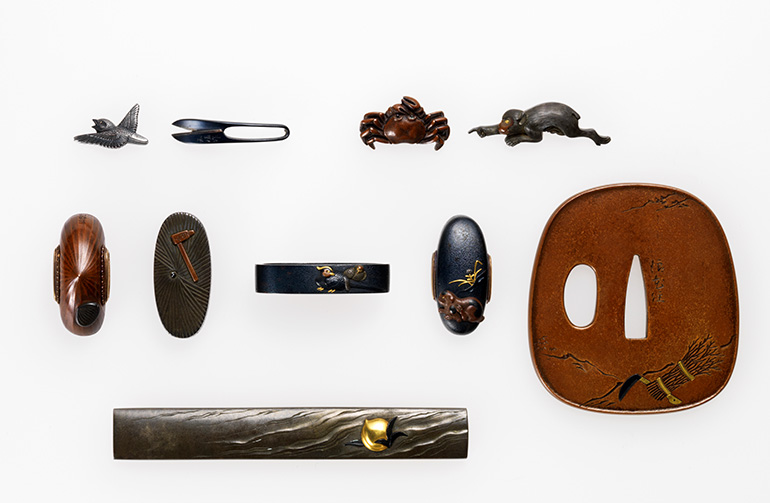
Set of Sword Fittings with Fairy Tale Design
By Ogawa Tomotsune
These charming sword fittings feature “kawaii” designs inspired by familiar Japanese folktales such as Momotarō, The Battle of the Monkey and the Crab, and The Tongue-Cut Sparrow. The artist, Ogawa Tomotsune, was a metalsmith creating decorative sword fittings active in Osaka; very few of his works are known to survive today. Our collection includes many such rare examples, greatly valued for their importance as historical artifacts.
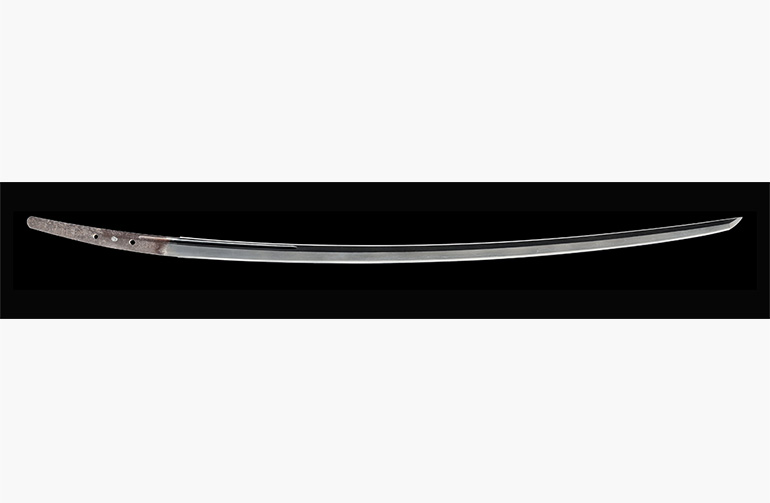
- Important Art Object
Tachi Sword by Rai Kunitoshi
During the latter half of the Kamakura period (1135-1333), Rai Kunitoshi was a renowned Rai School swordsmith in Yamashiro province (now the southern part of Kyoto). This slender blade, with its gentle curvature and graceful form, embodies an understated elegance that conveys grace and dignity without excess ornamentation.
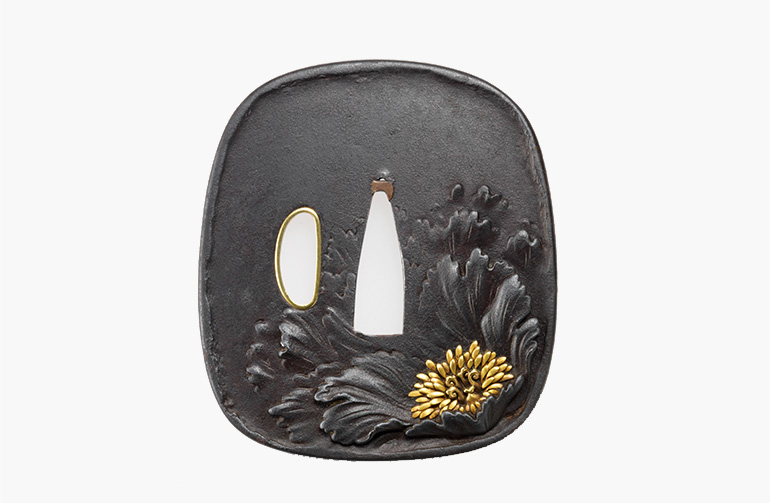
Sword Guard with Peony and Butterfly Design
By Kanō Natsuo
An Imperial Household Artist, Kanō Natsuo was one of the most highly regarded metalworkers of the late Edo and Meiji periods. This work superbly captures the soft, layered petals of the peony in expressive three-dimensional form, demonstrating the artist’s exceptional mastery of material and detail.
Concurrent Exhibitions
During “Ayanishiki: Textile Beauty Appreciated in Nishijin" (Saturday, December 20, 2025- Sunday, Febuary 1, 2026)
Gallery 2
Cutting a Valiant Figure: Weapons and Armor in the Nezu Museum Collection (cont'd)
Following Gallery 1, please enjoy a collection of real armor and lavish maki-e.
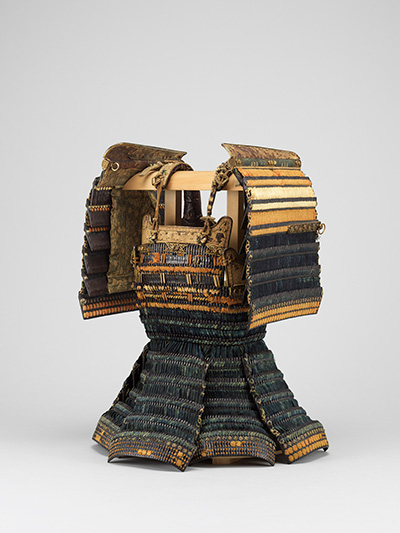
- Armor and Equipment
- Important Cultural Property
Haramaki Type Armor with Black Leather Lacing
Gallery 3
The Allure of Buddhist Art: Buddhist Sculptures Created in the Early Modern Period
Gallery 3 presents a Buddhist sculpture from the late medieval period (15th to 16th century) and masterpieces of early modern Buddhist sculpture.
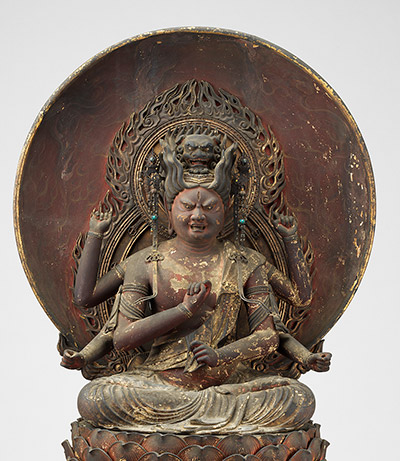
- Sculpture
Seated Aizen-myōō (Rāgarāja)
Gallery 4
Ancient Chinese Bronzes
The Nezu Museum collection of bronzes is world-renowned, and particularly strong in the area of late Shang (17th to 11th centuries BC) dynasty vessels, the pinnacle production period of this medium.
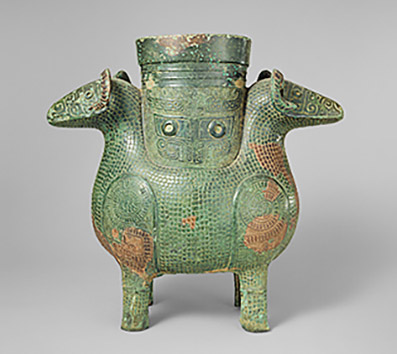
- Archaeological Artifacts / Mirror
- Important Cultural Property
Double-Ram Zun
Gallery 5
One Hundred Camellias: Motifs to Adorn Lives
Created during the start of the early modern camellia gardening boom, this work depicts one hundred varieties of the flower. It is shown alongside lacquerware and ceramics featuring camellia motifs.
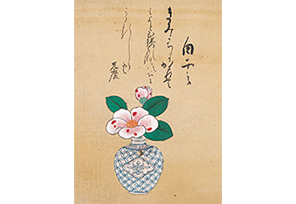
- Paintings
One Hundred Camellias
Attributed to Kanō Sanraku
Gallery 6
First Sprouts: A Spring Tea Gathering
Spring is the season when, surrounded by gentle sunlight, new growth suddenly sprouts on plants and trees. To celebrate the arrival of this season, in the world of tea, we welcome guests with an assemblage of utensils chosen for their bright and cheerful character.
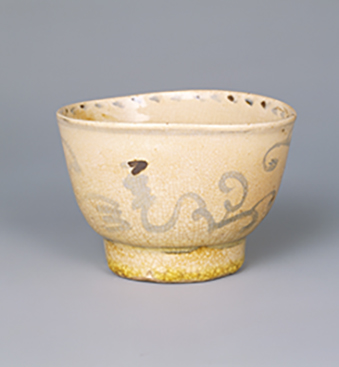
- Ceramics
Tea Bowl with Plant Design Seto ware
Special Case
Decorated Clock
This splendid Qing dynasty clock, a favorite of the Qianlong Emperor (1711-1799), is not to be missed.
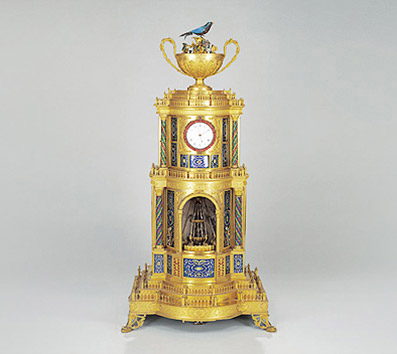
- Decorated Clock
Clock Decorated with a Bird on a Cup
- TOP
- Exhibitions
- Cutting a Valiant Figure